Comparing Dentures and Dental Implants
In modern dentistry, we have several ways of replacing missing teeth, from dentures to the individual dental implants San Diego patients love, and even options in between like implant-supported dentures. How can you know which is the best choice for your situation?
Advantages of Dentures
Dentures are a tried and true tooth replacement solution, particularly for patients who have lost all of their teeth in an arch. There are a number of advantages to choosing dentures:
- Dentures fill out the appearance of your face and profile while you’re wearing them, preventing a sagging, more aged appearance
- Dentures are a very affordable option for tooth replacement.
- No surgery is needed to start wearing dentures (unless there are failing teeth that still need to be removed)
Disadvantages of Dentures
Unfortunately, there are also significant drawbacks to using dentures:
- The pressure chewing places on our jawbones is what keeps them strong. Dentures cannot stimulate the jaw bones very effectively, which can lead to bone loss. This, in turn, changes the shape of the jaws and can make a set of dentures that once fit perfectly much looser.
- Slippage: when dentures don’t fit correctly, they may cause aching gums or shift around, resulting in slurred speech and the occasional awkward moment at the dinner table.
Types of Dentures
There are a few different types of dentures available, depending on your individual needs.
- Conventional full dentures: after any remaining teeth are removed and your mouth has healed (which may take several months), we create and place a full, removable denture.
- Immediate dentures: we take measurements and create models of your mouth on a preliminary visit, then place this denture on the same day your remaining teeth are removed so that you don’t have to go without teeth during the healing period. However, these may need to be relined or remade after healing to achieve the desired fit.
- Overdentures: if you have healthy teeth remaining, we can make a denture that accommodates them. This provides stability for your jawbone and support for the denture. Overdentures can pair with dental implants in the same way.
Caring for Your Dentures
To achieve the best result with dentures, it is essential to take good care of them. Continue to brush your gums, the roof of your mouth, and your tongue every day with a soft-bristled brush before inserting your dentures. This stimulates blood circulation in your oral tissues and removes plaque. The dentures themselves need to be brushed daily to remove food particles and plaque, as well as to prevent staining. When not being worn, dentures should be stored in water to prevent warping.
Dental Implants
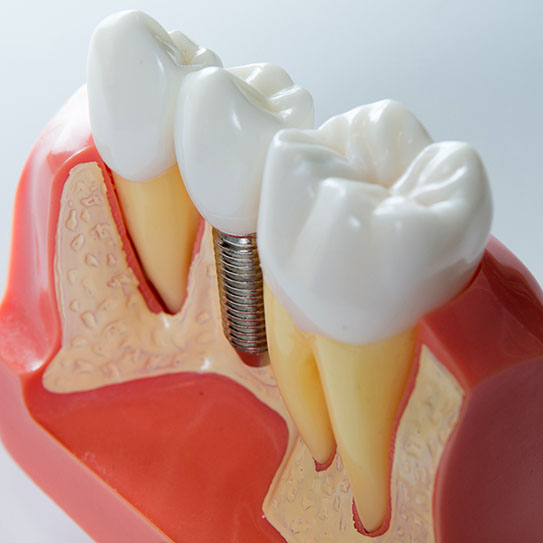
Dental implants are titanium posts surgically placed into the jawbone by an oral surgeon or implant specialist. We then place the final restoration at our office. Dental implants are the most advanced form of tooth replacement available. Not everyone is a good fit, as they require healthy gum tissue and strong jawbones to support them. They’re also a much more expensive option than dentures, but their many advantages are worth the price:
- Dental implants look and function much more like a natural tooth.
- They stimulate the jawbone when chewing and speaking, keeping the bone healthy and strong.
- They will last anywhere from 10 – 30 years if properly cared for.
- They do not require special equipment or storage, simply the same daily brushing and flossing as natural teeth.
It is essential to maintain good dental hygiene with implants. Even though they can’t get cavities like natural teeth, they are vulnerable to a unique form of gum disease called peri-implantitis. If plaque and bacteria build up around an implant, the surrounding gum and bone tissue can become infected, which can cause the implant to fail. Fortunately, good oral hygiene habits and regular dental visits go a long way towards preventing peri-implantitis.
The Best of Both Worlds: Implant-Retained Dentures
Patients who want some of the advantages of both dental implants and dentures often choose implant-retained dentures. They’re exactly what they sound like: a full arch of dentures supported by just a few dental implants. They don’t rub against the gums like dentures, and they stimulate the jawbone like individual dental implants. Implant-retained dentures can be full or partial, fixed or removable.
We Can Help You Complete Your Smile!
If you’re missing most or all of your teeth, we can’t wait to help you get your full smile back. Schedule a consultation at Barbara Young DDS today. We’ll work together to determine which tooth replacement option is ideal for your mouth and your budget, whether that means traditional dentures, dental implants, or a hybrid solution. We’re here to help you every step of the way.