A Quick Overview of Tooth Decay
If you suspect you have untreated tooth decay and you’ve been searching “dentist near me” to find help protecting and treating your teeth, we can help. In addition to treatment, we want to provide everyone in and around San Diego with the knowledge and tools to stop future cavities from developing.
What Causes Tooth Decay?
Tooth decay is caused by exposure to acid and oral bacteria. Even though tooth enamel is the hardest substance in the human body, it is very vulnerable to erosion when exposed to acid, and a lot of the foods and drinks we enjoy are acidic. Even if we avoid acidic foods and drinks, oral bacteria also feeds on the debris of sugary or starchy foods and excretes acid onto our teeth. If we don’t practice good oral hygiene habits, our teeth weaken and tooth decay can set in.
Tooth Decay Stages
Tooth decay progresses in five stages:
- Demineralization. Decay begins at the molecular level in your tooth enamel when minerals are leached from the enamel structure. You may notice chalky-looking patches on your teeth at this stage.
- Enamel decay. Without treatment, demineralization will worsen into a full breakdown of the enamel, which is when visible holes may begin to appear, and those chalky patches often darken to brown.
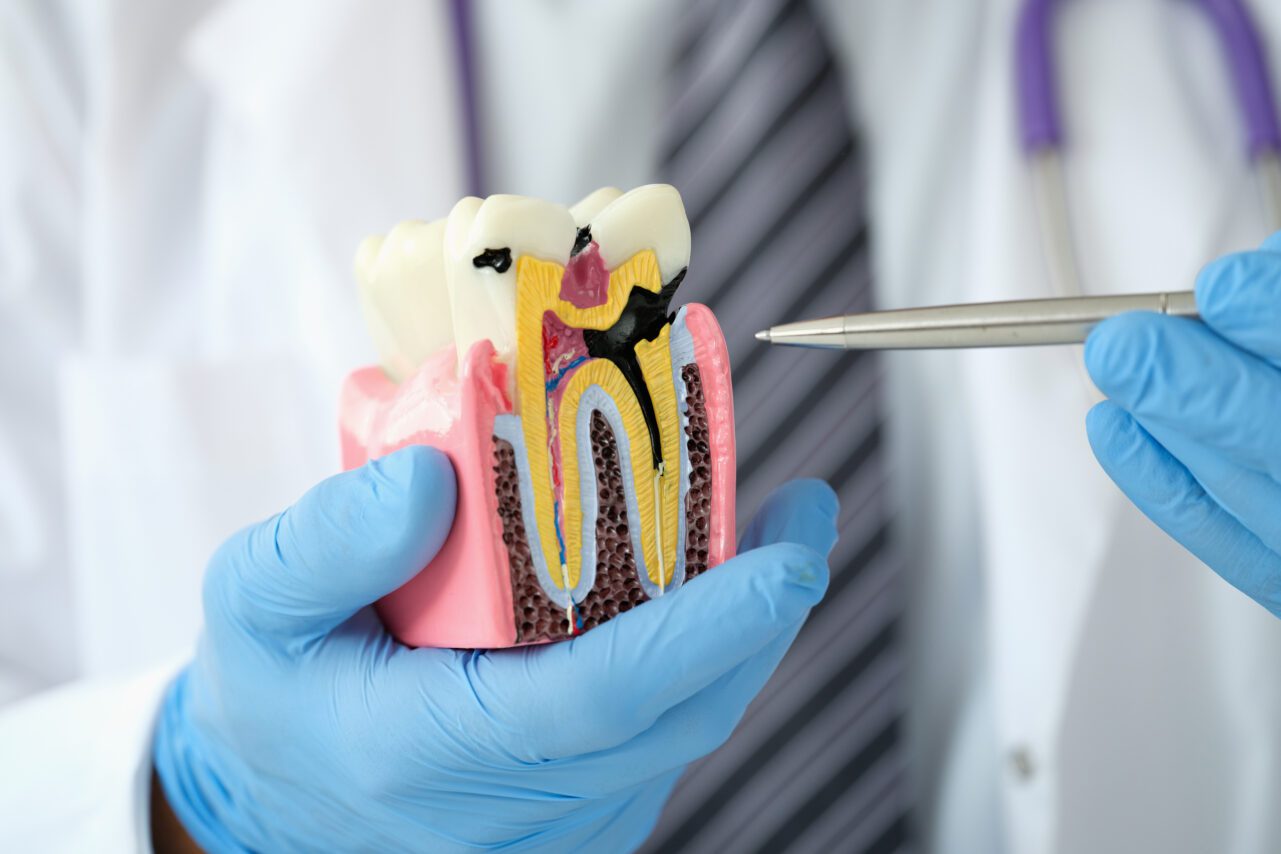
- Dentin decay. Beneath the enamel is the softer, bony layer called dentin. Cavities move fast once they reach this layer. Spots on the tooth may turn even darker brown, and tooth sensitivity is likely.
- Pulp damage. Once the decay breaks through the dentin, it will reach the pulp chamber, where the nerves and blood vessels keep the tooth alive and provide sensation. At this point, you may experience redness and swelling in the gums, and spots on the tooth may be completely black.
- Abscessed tooth. The bacteria in the pulp chamber can now reach the root of the tooth and spread to the surrounding tissues. It can even spread to the bloodstream, which is life-threatening.
Tooth Decay Symptoms
In the earliest stages, when it’s only affecting the outer tooth enamel, tooth decay won’t usually cause any noticeable pain or other symptoms (which is why it’s so important to schedule regular dental visits, so that we can catch cavities at this stage). Once they reach deeper layers of the tooth, you may experience symptoms like:
- Persistent bad breath or a foul taste in your mouth
- Tender gums that bleed easily
- Facial swelling
- Mouth pain or toothache
- Sensitivity to foods or drinks that are very hot or cold
How the “Dentist Near Me” Treats Tooth Decay
If tooth decay has eaten a hole through the tooth enamel only or the enamel and the dentin, we can usually restore the tooth with a simple filling. Once it reaches the pulp, and especially if the tooth is abscessed, a filling isn’t enough, and we will have to perform root canal therapy to save the tooth. In the worst cases, it may not be possible to save a tooth and extraction may be necessary, but regular dental visits make it unlikely that a cavity can ever get this far.
Stopping Cavities Before They Form
There are many simple things we can do to keep our teeth free of decay. Brushing twice a day for two full minutes with a soft-bristled toothbrush will clear away plaque, and using a fluoridated toothpaste will give our teeth the minerals they need to stop demineralization and stay strong. Flossing reaches the surfaces that brushing alone cannot, and regular professional cleanings are the only way to remove any built-up tartar.
It also helps to avoid snacking throughout the day on starchy, sugary, or acidic foods. Saliva (and drinking water) neutralizes acids in about half an hour, but every time we eat a potato chip or have a swallow of soda, that process resets, and our teeth are freshly bathed in acid.
Can Tooth Decay Be Reversed?
Only in the earliest stage. Demineralized patches in our tooth enamel can be remineralized if we’re getting enough calcium and supplying enough fluoride while brushing, but once weakened enamel is destroyed, it can’t come back. That’s why prevention is so crucial.
Don’t Delay Necessary Dental Treatment; We Can Help!
Keeping our teeth and gums healthy is something we need to be proactive about, because the bacteria threatening our oral health don’t take breaks. If it’s been a long time since your last visit to a “dentist near me” or if you’re experiencing any of the symptoms described above, contact Barbara Young DDS today. We can’t wait to help you get your oral health back on track.